
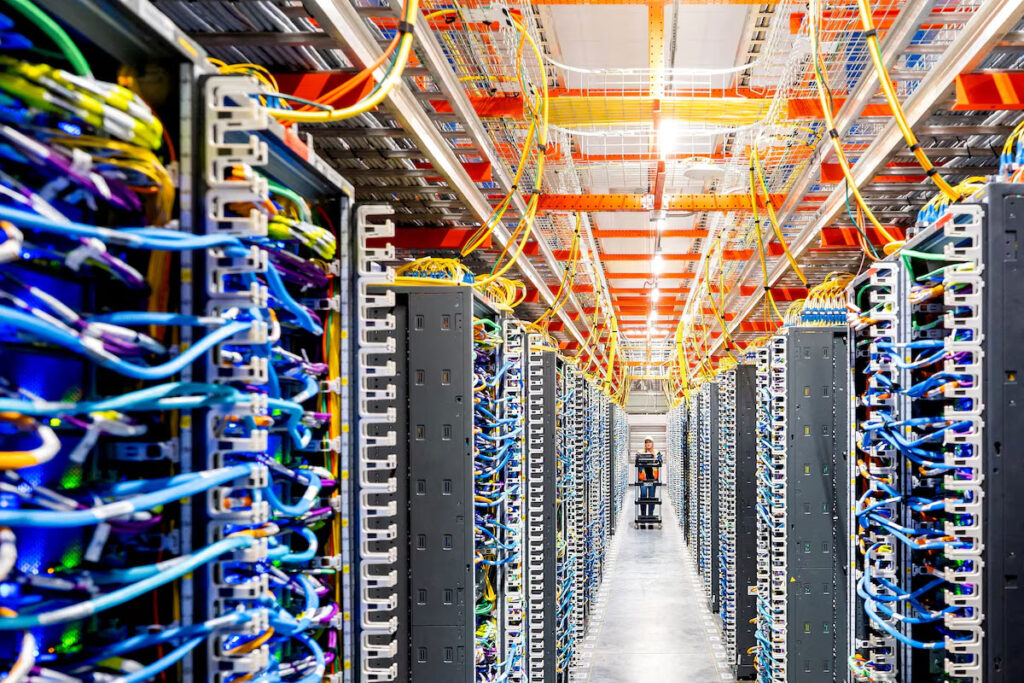

Amazon’s data center division has acquired the 120-acre Virginia Science and Technology Campus in Ashburn, VA from The George Washington University, with zoning that allows development of a data or IT center on the site. The move aligns with Amazon’s broader strategy to expand AI infrastructure.
Here’s my take: this isn’t just a tech expansion story. It’s a signal that data center capacity and AI infrastructure are becoming one of the most valuable forms of real estate in the modern economy.
A few observations:
• AI is fundamentally an infrastructure race.
The headlines focus on models and apps, but the real bottleneck is power, land, fiber, and cooling. Whoever controls those layers wins.
• Land values are being repriced by digital infrastructure.
Places like Ashburn, already one of the world’s largest data-center hubs, are becoming the equivalent of ports or rail junctions in the industrial era.
• Universities are navigating new financial realities.
GWU said the sale is part of an effort to strengthen long-term finances amid structural budget challenges. Financial pressures are pushing universities to rethink their footprints and, in some cases, monetize real estate that may be more valuable supporting digital infrastructure.
What stands out to me is the symbolism:
A campus originally built for education and research may soon support the infrastructure powering AI models trained on the world’s knowledge. In some ways, it’s a physical manifestation of the transition from the knowledge economy to the compute economy.
AI is already reshaping industries. The bigger question is whether we’re thinking boldly enough about the infrastructure required to support it.